When anthropological archaeologist Dr. Nam C. Kim pulls one of his father’s photographs from a family album, he is not just holding a picture. He is holding a history.
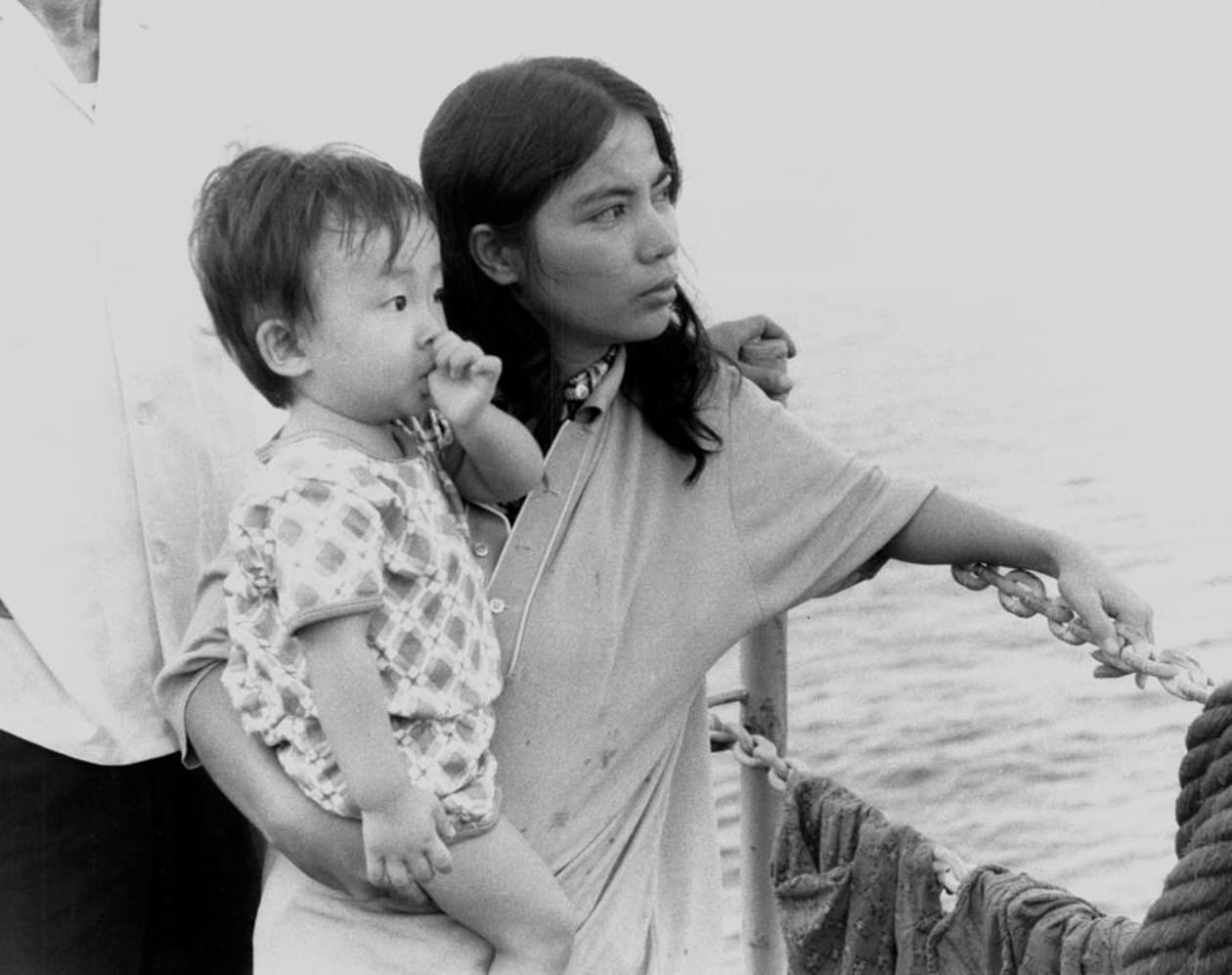
Photo of Nam C. Kim and Hien Vu Kim, taken by Chong S. Kim off the coast of Vietnam.
Today a professor of anthropology and archeology at the University of Wisconsin-Madison, Kim is the son of Korean father Chong S. Kim and Vietnamese mother Hien Vu Kim, who together fled Saigon in the spring of 1975 with their infant son by way of the U.S. Army’s Operation Frequent Wind—the codename referring to one of a series of overlapping operations resulting in the swift evacuation that April from the Republic of Vietnam (RVN, 1955–1975) of over 50,000 refugees via airlift and navy transport in the dramatic last days of the Vietnam War. The Kim family quit the capital just hours before it fell to the enemy.
Chong S. Kim was a photographer by trade. He photographed his family before the war, so it seemed only natural to continue that documentation throughout their escape and into their new life in the United States. Some of these photos, which Nam recently uncovered, were displayed in the family’s photo studio when they arrived in Durham, North Carolina. Others sat undisturbed for decades in boxed albums stashed in the family’s basement.
But over the last several years, the Kim family photos have met a new and distinguished destiny. More than family keepsakes, the photos are rare firsthand accounts, or artifacts, of an epic cross-cultural story, one that for too long had gone unappreciated. Nam explains:
“I did not fully grasp their connection to much larger histories”
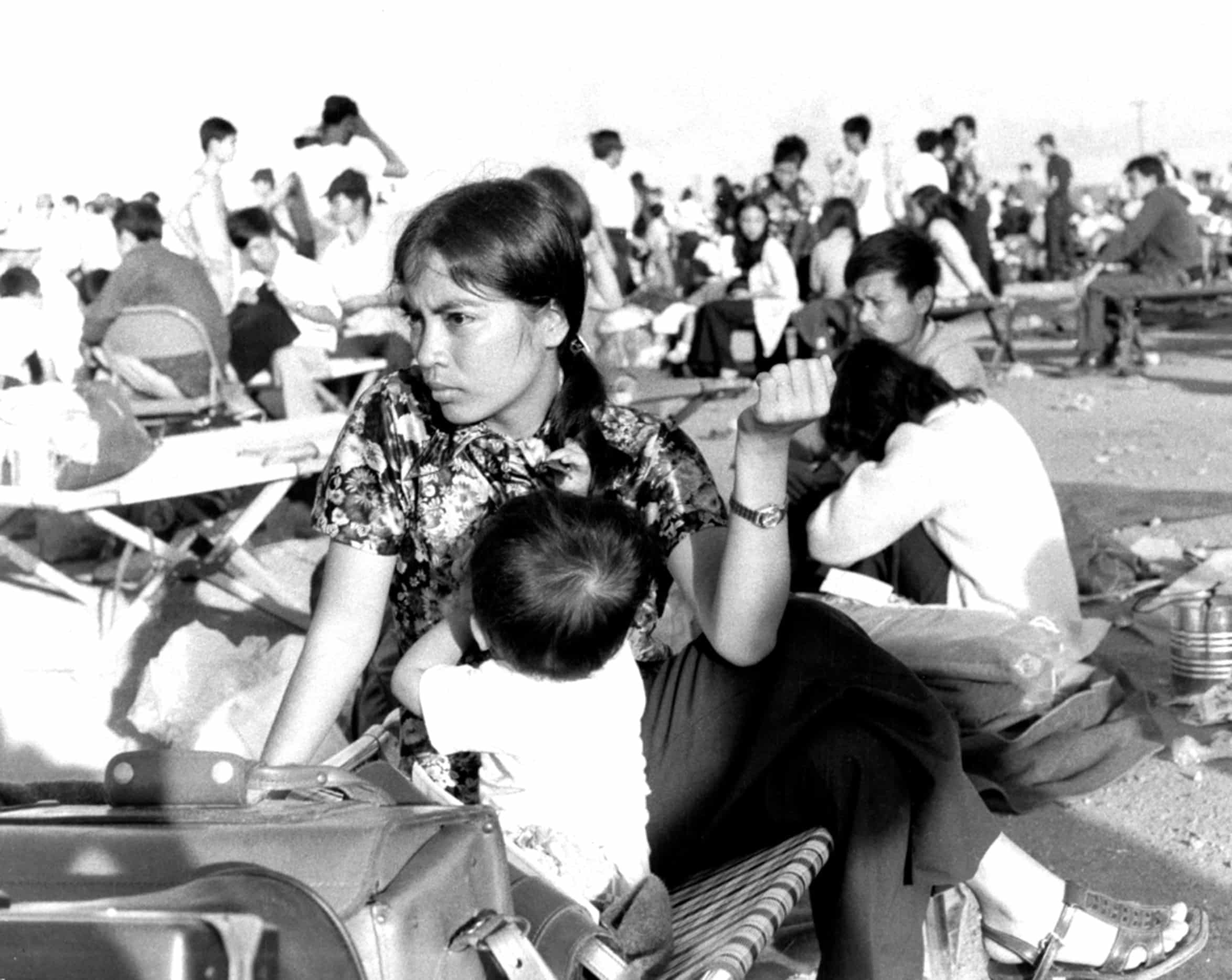
Photo of Hien Vu Kim and Nam C. Kim at “Tent City” at Orote Point, Guam, during Operation New Life. Taken by Chong S. Kim, May 1975.
At the University of Wisconsin-Madison, Nam currently leads the archival digital project “Operation New Life–Guam, USA (1975)” (ONL–Guam), which the university is hosting in partnership with the Guam Philharmonic Foundation and the Micronesian Area Research Center of the University of Guam. The project is supported by Henry Luce Foundation’s Asia Program, which seeks to foster cross-cultural understanding, cooperation, and knowledge-sharing..
As Asia Program Director Yuting Li pointed out recently,
“Nam Kim’s work reminds us that history is not made only in the large sweep of events; it also lives in the objects families chose to carry across borders—and those left behind—and in the stories passed between generations. The Foundation’s Asia Program invests in this kind of scholarship because preserving memory is itself a form of civic work; it is also how communities repair themselves. In Nam’s case, by documenting refugee experiences and safeguarding histories that might otherwise fade or be silenced, this work helps communities better understand the past, repair themselves in the present, and leave a fuller record for generations to come.”
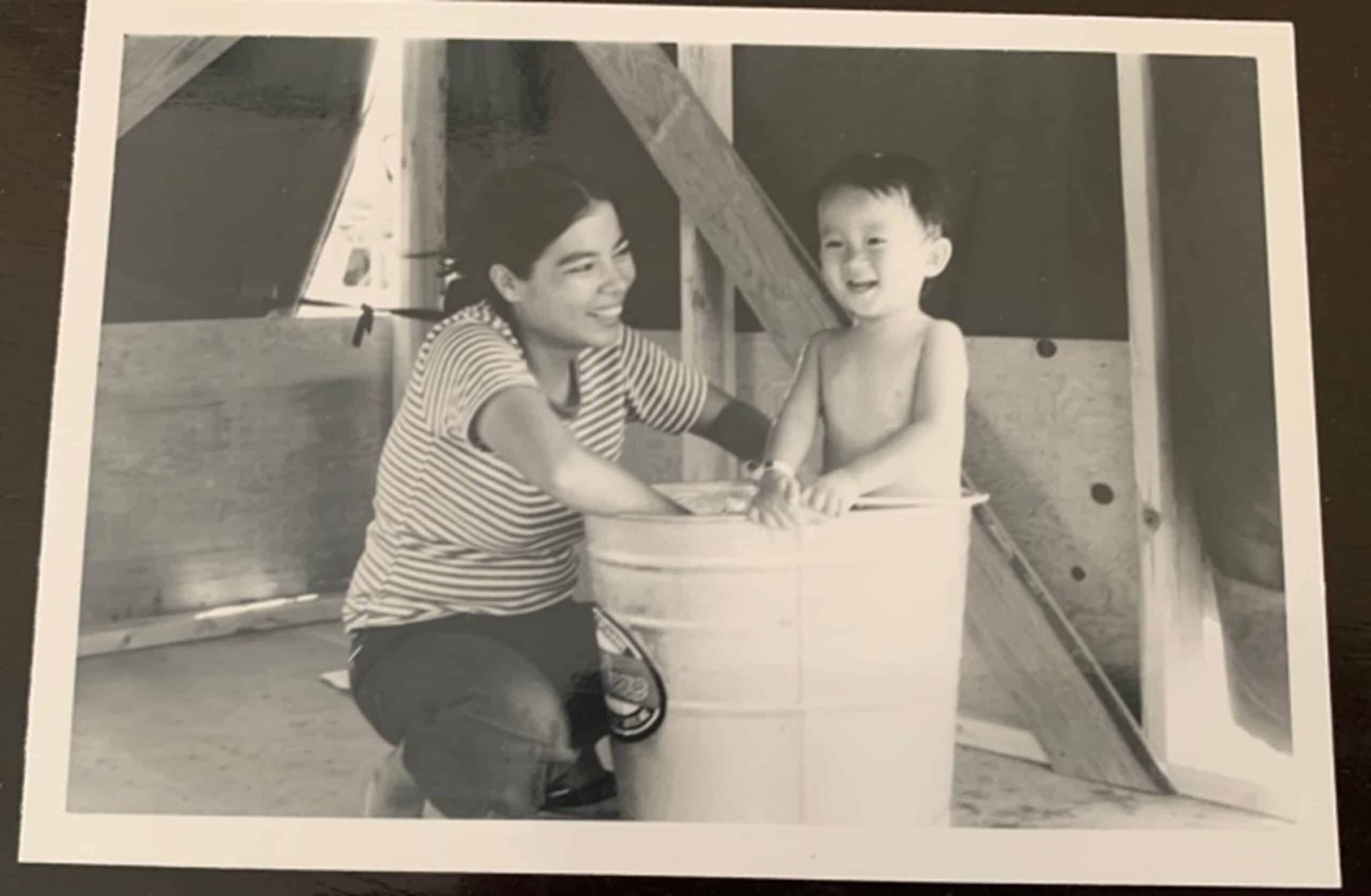
Photo of Hien Vu Kim and Nam C. Kim at a refugee camp in Eglin Air Force Base (Florida). Taken by Chong S. Kim, May 1975.
As a young boy growing up in the United States with no real memory of his Southeast Asian origins (he was only one year old when the North Vietnamese took over his city), Nam initially experienced images of his parents’ early life in South Vietnam as curiosities, fascinating glimpses into a place he couldn’t quite access but felt tethered to.
In those early years, the photographs served as a kind of primer, he says. An introduction to Vietnam, Korea, and the complexity of the histories that had shaped his parents long before he came into the world. He peppered his parents with questions, and unlike many families fractured by war, displacement, or trauma, his parents never turned away.
“Looking back, I can see how fortunate I was that my questions were never deflected … Instead, they were always enthusiastically met [by my parents] with anecdotes about how wars in Korea and Vietnam shaped the communities and lives of our relatives.”
By high school and college, Nam’s curiosity had matured into pride. This shift would define his career in anthropological archeology.
When he first announced plans to travel to Vietnam as a graduate student to conduct archeological research, his parents were apprehensive. After all, he was returning to the very region of the globe they had purposely fled from. Soon enough, however, their apprehension gave way to understanding. “They now recognize the personal significance it holds,” he says. “We can appreciate how life has come full circle.”
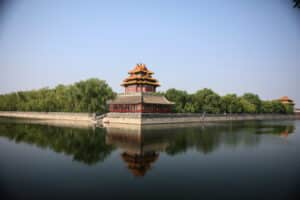
Nam has been conducting archaeological fieldwork at the Co Loa settlement in Vietnam’s Red River Delta since 2005. A heavily fortified site near modern-day Hanoi, Co Loa is regarded as an important foundation of Vietnamese culture.
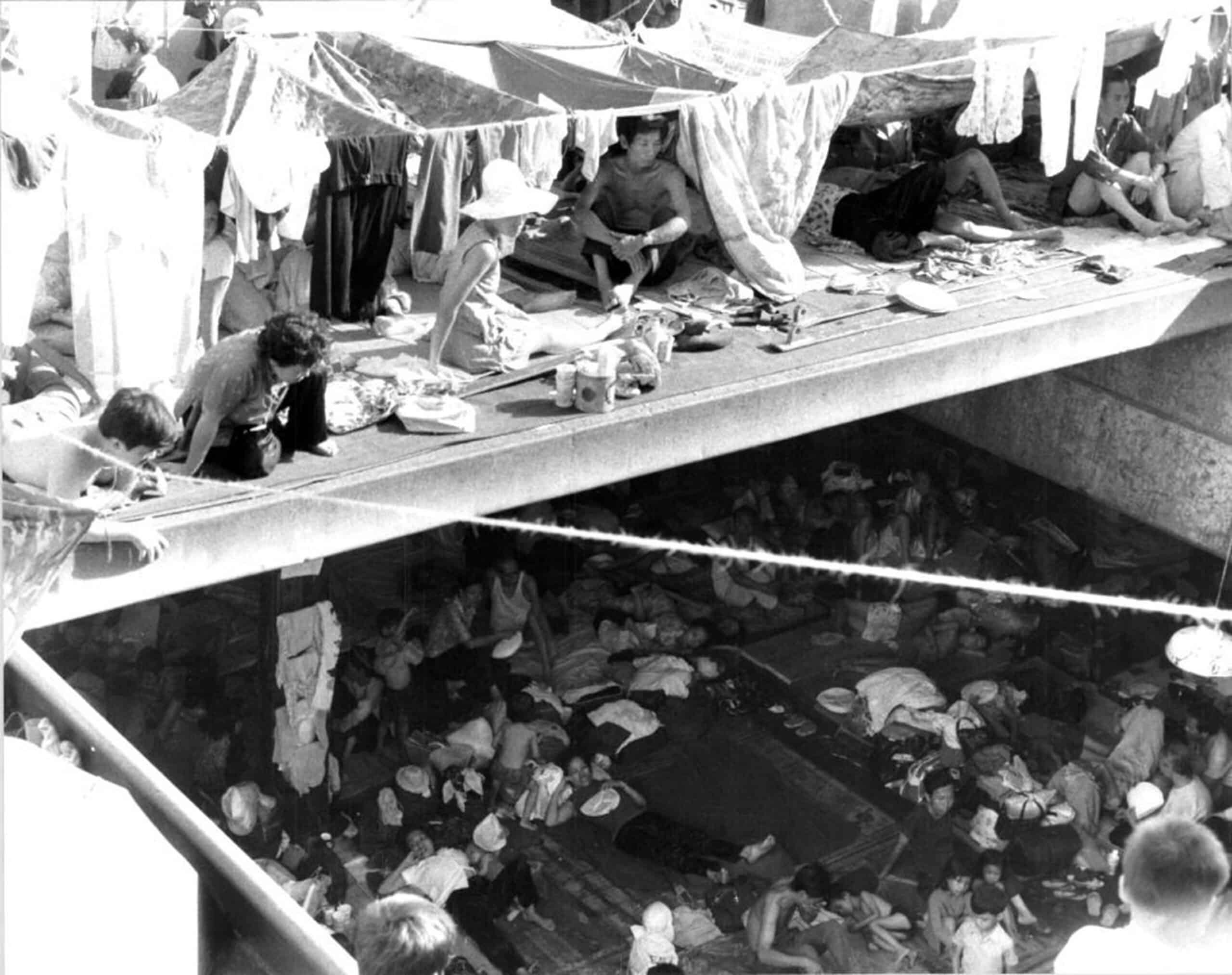
Photo taken by Chong S. Kim of refugees aboard the USS Truman Kimbro, May 1975.
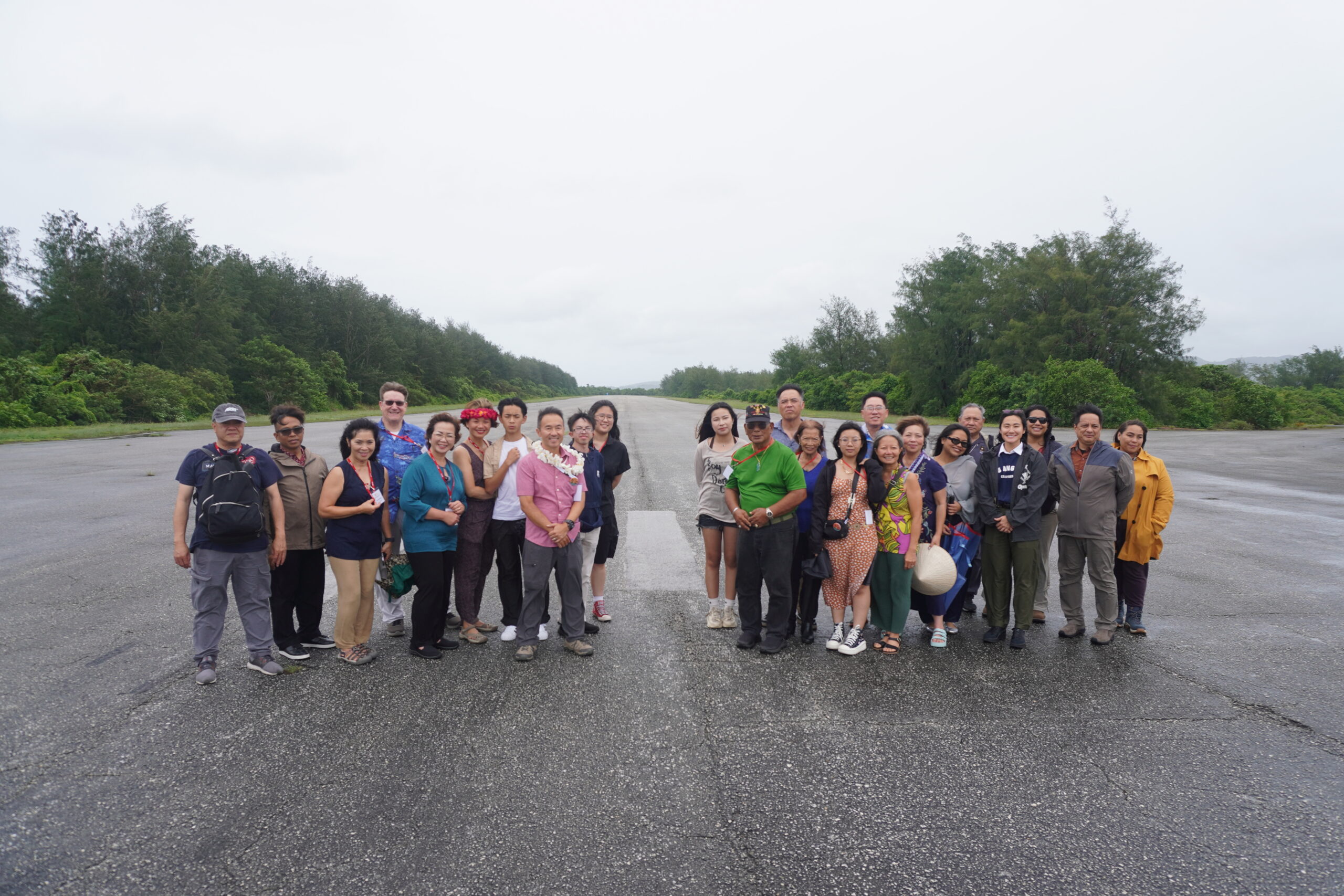
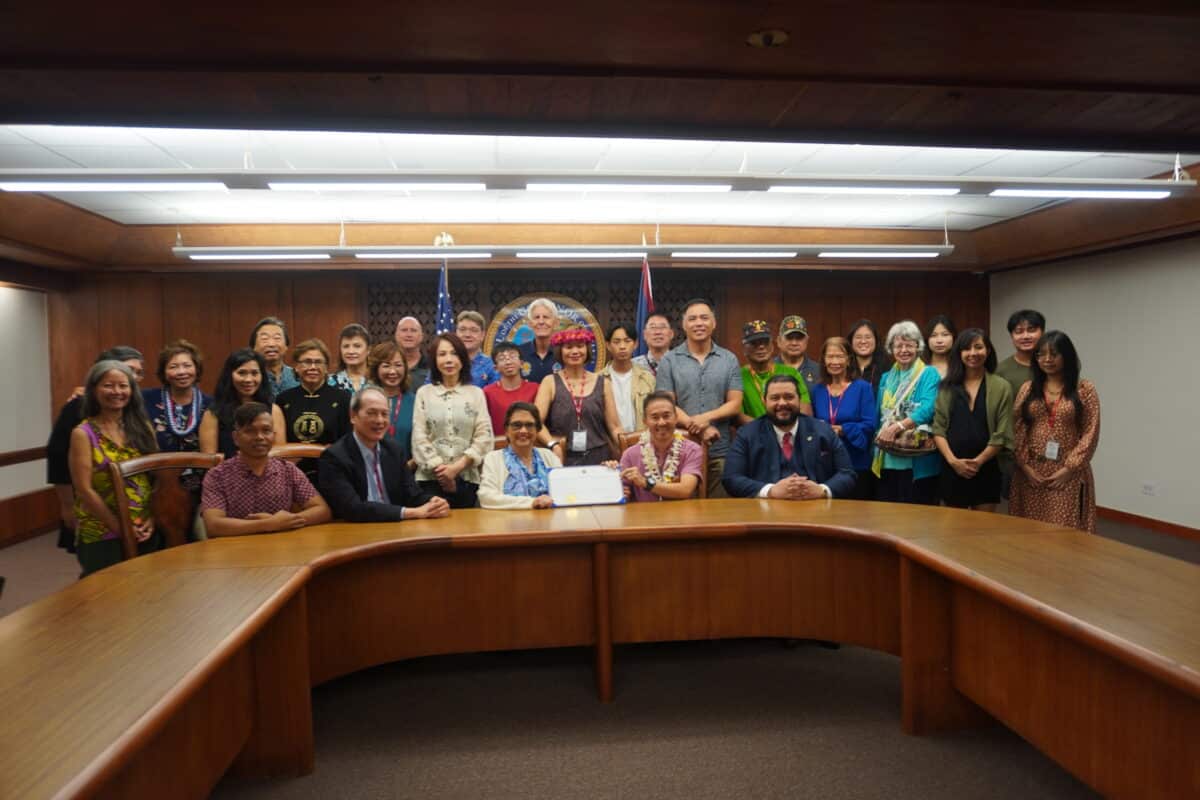
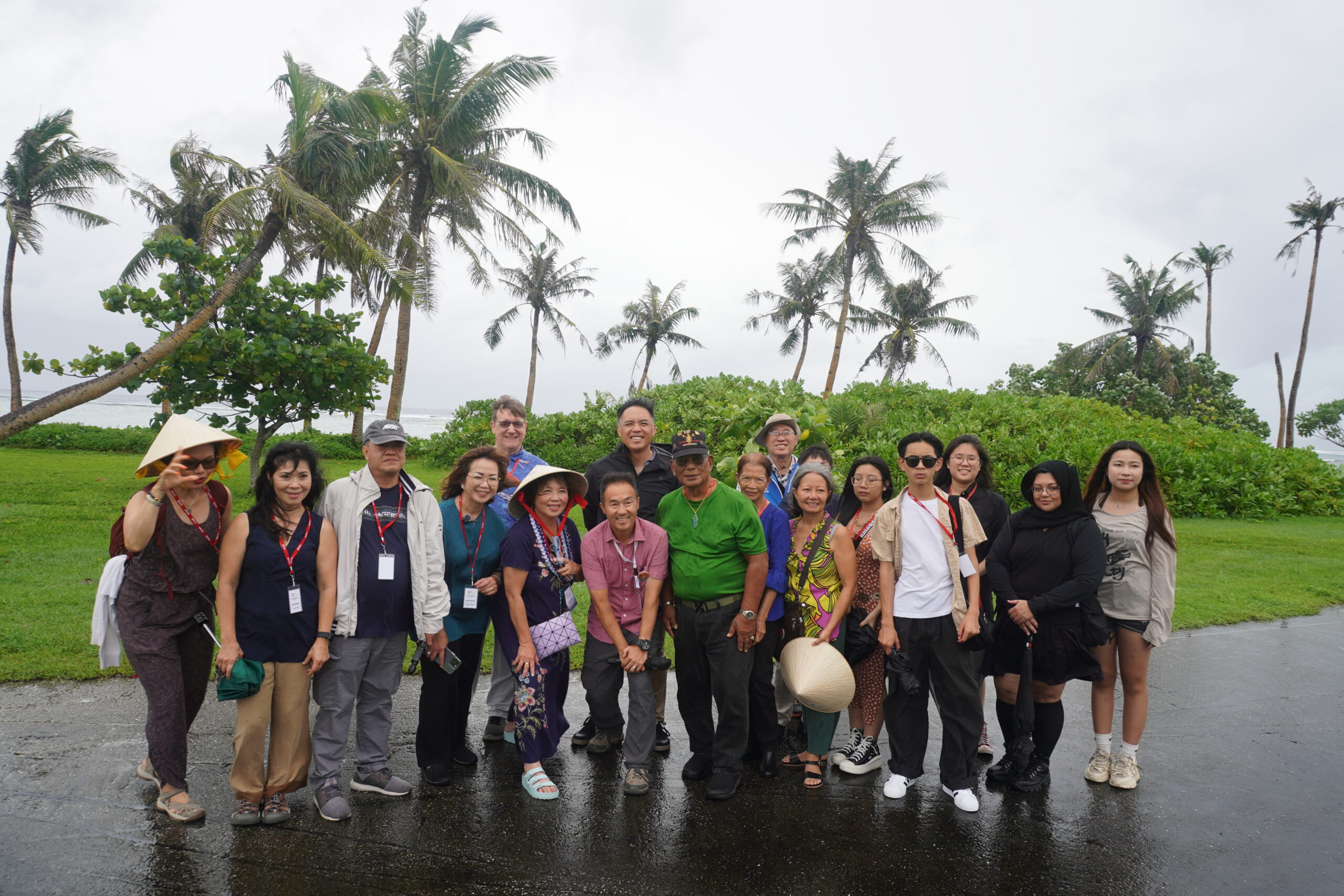
As the ONL–Guam website outlines, Kim and his project team have been conducting public workshops, gatherings, lectures, and site visits since mid-2025, partly in celebration of Operation New Life’s 50th anniversary (1975–2025). Moreover, the project seeks to enhance our understanding of the experience of refugees whose first major stop on their way to the United States was the island territory of Guam where, by operation’s end, well over 100,000 refugees had been cared for in several camps while undergoing processing on their way to the United States.
Arguably the centerpiece of the ONL–Guam project is its archival dimension (including its ongoing gathering of oral histories), which documents refugees’ origin stories by recovering “memories, photographs, documents, artifacts, heirlooms, and other materials” to bring to greater understanding the full range of displaced refugees’ experiences—including those of Kim’s family, who spent a memorable two months at places like “Andy” (Anderson Air Force Base), their “first adopted home,” as Kim recalls, before the family proceeded to America.
Recently reflecting on the significance of the project, Kim marveled,
“What is striking for me as I look back is how [while] the three of us came to the U.S. at the same time … [my parents’ and my own] journeys to belonging, to becoming American, were simultaneously the same and radically different. But we all recognize, and are grateful for, the good fortune that permitted our lives to unfold as they [have] in a new country.”
In addition to his university teaching duties and archeological fieldwork, Kim recently led the founding of Operation New Life Center (ONLC), a nonprofit archival entity located in a storefront space in Guam’s Micronesia Mall. The ONLC, which hosted an inaugural exhibition in June 2025, works to ensure that the stories of Vietnamese refugees processed through camps at Guam are preserved for posterity. Kim regards the ONLC as no static institution; rather, it is a living archive, where refugees’ descendants, scholars, and the public can reckon with the emotional and ethical legacies of wartime migration. Operation New Life, from Kim’s perspective, was not only a military undertaking; in addition, it was a profound human story shaped by loss and resilience, both of which imply responsibilities we now inherit.
Nevertheless, Kim is quick to reject the idea that his story is exceptional. He believes that our individual histories, however ordinary, represent vital, continuous threads in the fabric of collective human experience. But he also knows that his belief is not universal. For whatever reasons, many elders do not speak. Many stories remain sealed.
“For the elders in our lives who are not willing or ready to share, I would advocate for more subtle and modest ways of shepherding the storytelling process.”
Ask about food, he suggests. Ask about childhood routines or the origin of an object. Peripheral questions, he explains, sometimes open a door that direct questions cannot. And if the door doesn’t budge? Share a story another has told. One from a book, a film, a documentary. The resonance of another’s experience can effectively give elders permission to see their own differently, and the dialogue sparked by these conversations can be nurtured.
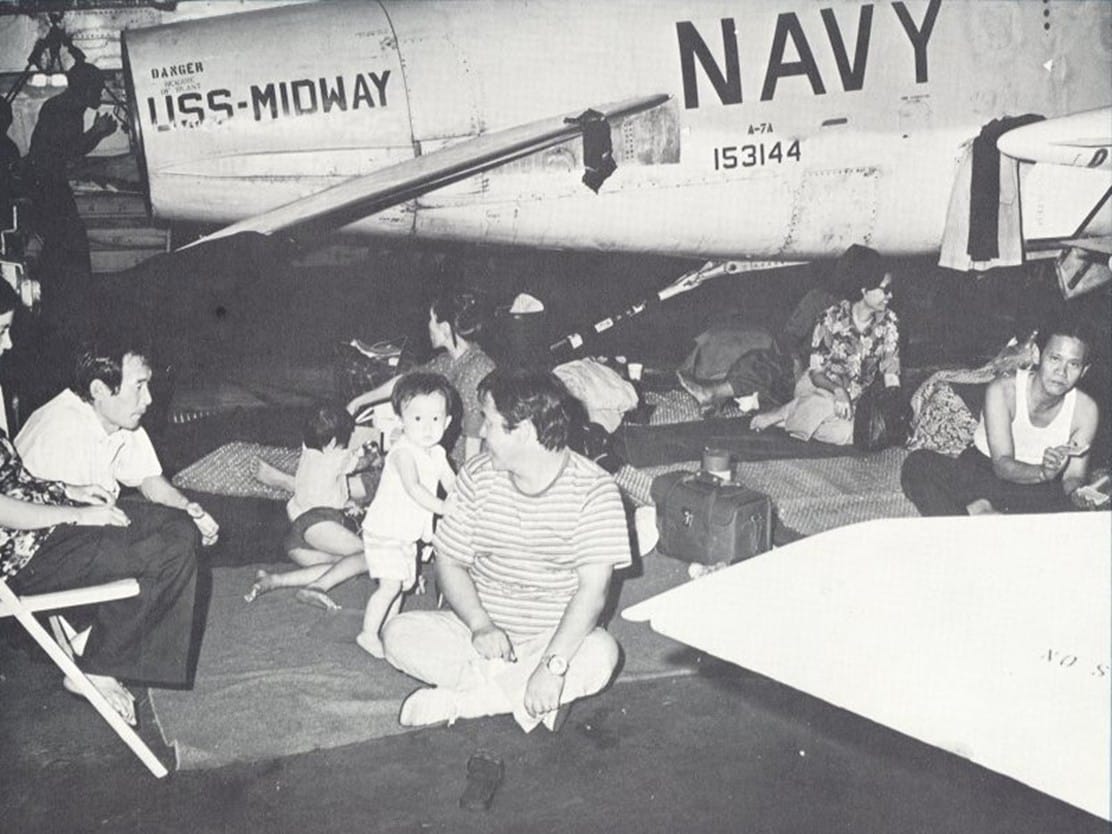
Photo of Chong S. Kim and Nam C. Kim in the hangar of the USS Midway, 1975. Photo taken by the US Navy.
Looking back, Kim makes greater sense of his past with a newfound perspective,
“When I was younger, I did not fully grasp how our family stories connected to much larger histories. But through time, education, and greater awareness, I’ve come to see how the full weight of global geopolitics came to be reflected in the smaller, very meaningful bits of history largely absent from textbooks.”
In honoring his family’s images, Kim reminds us that our own stories—however small, however fragile—are pieces of history too. The task is not simply to preserve them, but to carry them forward with care, before they vanish.